How to Build Muscle in Your 30s, 40s & 50s | Physiques Gym Phoenix
Muscle Building in Your 30s, 40s, and 50s: What Actually Works
Backed by science & 30 + years of Physiques Gym results
If you’re in your 30s, 40s, or 50s and serious about building muscle, you’ve likely realized something most people don’t want to admit: what worked in your 20s doesn’t work the same anymore.
You can still train hard. You can still be disciplined. But recovery takes longer, progress feels slower, sleep matters more, stress matters more, and nutrition matters more. Ignoring those realities doesn’t make you tougher—it just makes your progress harder.
This isn’t a failure of effort. It’s biology. And the good news is this: muscle building is not only possible at this stage of life—when done correctly, it’s often more effective than ever.
At Physiques Gym, many of our long-term clients fall directly into this demographic: professionals, parents, former athletes, executives, and serious adults who are no longer interested in guessing. They want intelligent training, grounded in evidence and guided by qualified coaches.
What Changes With Age—and What Doesn’t
Aging does bring measurable physiological changes. The key is understanding them and training with intention instead of fighting reality.
What actually changes
- Sarcopenia: gradual loss of muscle mass begins as early as your 30s (commonly estimated at ~0.5–1% per year without consistent resistance training).
- Anabolic resistance: muscle becomes less responsive to small protein doses and low-effort training stimulus.
- Hormonal shifts: testosterone, estrogen, growth hormone, and IGF-1 generally decline with age.
- Recovery capacity: connective tissue adapts more slowly and nervous system fatigue accumulates faster.
- Stress load: work, family demands, and sleep debt can meaningfully reduce adaptation.
These shifts are well documented in the exercise physiology literature. The mistake is treating them as a reason to stop training hard—or worse, to stop training smart.
What does not change
Muscle still responds to the same core principles:
- Progressive overload still drives hypertrophy.
- Strength can increase significantly at any age.
- Lean mass can be built well into your 50s and beyond.
The issue usually isn’t age. It’s programming.
Why Most Adults Fail at Muscle Building After 30
From both research and two decades on the gym floor, the failure patterns are consistent—and they usually fall into two extremes.
1) Training like you’re 22
High volume, constant intensity, minimal recovery, and ego-driven loading can work briefly, but it often breaks people down over time.
- Chronic inflammation
- Lingering joint pain
- Plateaus
- Burnout
2) Training like you’re fragile
Light weights, endless circuits, and “sweat sessions” without progressive overload don’t create the mechanical tension needed for muscle growth.
- No meaningful hypertrophy stimulus
- Gradual muscle loss
- Declining metabolic health
Both approaches fail because they ignore the middle ground: strategic, progressive, recoverable training.
What the Science Supports (and We Apply Daily at Physiques Gym)
1) Progressive Overload Still Matters—But It Must Be Smarter
Hypertrophy is driven by mechanical tension, sufficient volume, and progressive overload. What changes with age is the need to apply those variables with higher precision.
What tends to work best for serious adults:
- Primary work in moderate rep ranges (often 6–12), with strategic heavier and lighter phases.
- Controlled tempo and excellent execution.
- Stable compound lifts supported by smart accessory work.
- Long-term progression (not weekly randomness).
At Physiques Gym, we don’t chase exhaustion. We chase effective stimulus you can recover from and repeat consistently.
2) Volume Must Match Recovery Capacity
More work is not automatically better. Quality matters more as recovery capacity narrows with age.
High-performing programming typically includes:
- Fewer “junk” sets
- Higher-quality working sets near effective effort
- Planned deloads
- Strategic frequency (often 3–5 sessions/week depending on the client)
This is why many adults progress faster than younger lifters once they’re on a real plan: they’re consistent, disciplined, and training with purpose.
3) Protein Intake Becomes Non-Negotiable
Because of anabolic resistance, adults typically need more intentional protein intake and meal distribution to support muscle protein synthesis.
Common evidence-based targets used in coaching practice:
- Roughly 0.7–1.0g of protein per pound of lean body mass per day (individual needs vary).
- Per-meal protein doses often landing around 30–45g depending on body size and activity.
- High-quality sources that are rich in essential amino acids (especially leucine).
At Physiques Gym, nutrition isn’t an afterthought. It’s integrated into the training system because it directly impacts recovery, strength, and lean mass gains.
4) Strength Training Improves the Whole “Health Environment”
Properly structured resistance training doesn’t just build muscle—it supports the physiology that makes muscle building easier over time.
- Improves insulin sensitivity
- Supports hormone health and metabolic function
- Improves bone density
- Reduces injury risk through stronger tissue and better movement
As you age, lifting becomes more than aesthetics. It becomes a long-term health strategy.
5) Recovery Is a Skill, Not “Rest”
Recovery isn’t doing nothing. It’s actively managing the inputs that determine whether training turns into growth or turns into wear-and-tear.
- Sleep quality and consistency
- Weekly training load and intensity distribution
- Exercise selection for joints and biomechanics
- Nutrition timing and total intake
- Life stress management
At Physiques Gym, recovery is programmed—not guessed.
Why Coaching Quality Matters More With Age
Here’s the reality: the older and more experienced you are, the less margin for error you have. Not because you’re weaker—because you’re busy, stressed, and your body demands precision.
You don’t need hype. You don’t need chaos. You need a system.
Qualified coaching provides:
- Objective programming decisions
- Load and fatigue management
- Technique refinement and movement quality
- Intelligent exercise modification when needed
- Accountability without ego
- Long-term planning that matches your physiology and lifestyle
This is why serious adults eventually outgrow big-box gyms, random group classes, and influencer plans—and seek a facility built for results.
What 20 Years of Physiques Gym Results Show
Across thousands of clients aged 30–50+, the pattern is consistent:
- Muscle growth is absolutely achievable.
- Progress accelerates with structure.
- Injuries decrease when training becomes smarter.
- Confidence rises alongside strength.
- Consistency beats intensity over the long haul.
- Adults thrive in disciplined environments.
Our best clients aren’t chasing trends. They’re investing in process.
Why Serious Adults Choose Physiques Gym
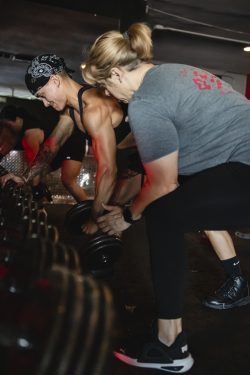
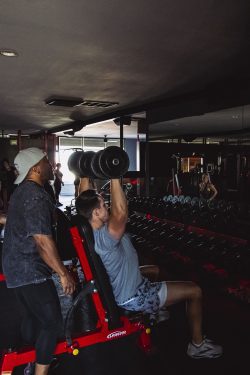
Physiques Gym is not a casual gym. It’s built for serious people who want real coaching, real structure, and real results.
We are designed for:
- Adults who value expertise
- Professionals who want a plan—not guesswork
- Clients who understand that coaching matters
- Individuals ready to train with intention
What separates us:
- 30+ years of proven transformation experience
- Pro-level coaching standards and accountability
- Structured, periodized training systems
- Nutrition guidance grounded in physiology and experience
- A culture of discipline and respect
The Bottom Line
Building muscle in your 30s, 40s, and 50s isn’t about doing less. It’s about doing the right things consistently:
- Train hard—intelligently
- Eat enough—especially protein
- Recover deliberately
- Follow a plan
- Work with professionals who understand adult physiology
Results don’t come from hacks. They come from systems.
Your Next Step
If you’re ready to build muscle the right way—without wasting years guessing—Physiques Gym is where that journey starts (or gets corrected).
📍 North Phoenix’s home of structured, results-driven training
Book a Physiques Gym Consultation
Explore Kaizen Online Training (Remote Coaching)
Physiques Gym
Built for serious people. Built for long-term results.