Why Is It Harder to Lose Weight After 40?
You’re eating pretty much the same way you always have.
You’re still exercising.
Maybe you’ve even started doing more cardio.
But suddenly the weight that used to come off with a few weeks of cleaning up your diet isn’t moving nearly as easily.
If you’re in your 40s and wondering, “Why is it so much harder to lose weight now?”, you’re asking a question we hear all the time.
And no, your body didn’t suddenly stop working because you turned 40.
But your body, your lifestyle and your needs probably aren’t exactly the same as they were at 25.
That distinction matters.
At Physiques Gym in Phoenix, Arizona, we train adults at every level, from complete beginners to competitive athletes. One of the biggest things we try to help people understand is that getting results after 40 usually isn’t about punishing yourself with more exercise or eating as little as possible.
It’s about understanding what has changed and adjusting your strategy accordingly.
If you want a broader overview, start with our guide to weight loss after 40.
Does Your Metabolism Really Slow Down After 40?
This is usually the first thing people blame.
“My metabolism is shot.”
There is some truth behind the idea that energy needs and body composition can change as we age, but metabolism is only part of the story.
Weight can be influenced by age, activity level, sleep, lifestyle, genetics and other factors. Body composition can also shift over time, especially if muscle mass decreases and body fat increases.
But that doesn’t mean turning 40 flips some biological switch that makes weight loss impossible.
Often, several smaller changes have been accumulating for years.
Maybe you sit more than you used to.
Maybe you’re not carrying as much muscle.
Maybe you’re sleeping five or six hours instead of eight.
Maybe restaurant meals have become more frequent, alcohol has become part of the weekend routine, or portion sizes have gradually increased.
Individually, those changes may seem insignificant.
Over several years, they can matter.
You May Have Less Muscle Than You Used To
This is one of the biggest reasons we emphasize strength training as people get older.
Muscle is not just something bodybuilders care about.
Muscle matters for everyone.
As we age, maintaining muscle requires intention. If you’re no longer strength training consistently—or never started—your body composition may gradually shift toward less muscle and more body fat.
That can change how your body looks and functions even if the number on the scale hasn’t changed dramatically.
It’s also why we don’t believe the goal should simply be to make the scale go down.
We want people to lose body fat while maintaining or building as much useful muscle as possible.
That means resistance training needs to be part of the conversation.
You’re Probably Moving Less Than You Think
This one sneaks up on people.
Think about how much you moved when you were younger.
You may have walked across a college campus, worked a more physical job, chased young kids around the house, played recreational sports or simply spent less time sitting.
Then careers advance.
Desk time increases.
Commuting increases.
Responsibilities increase.
And everyday movement quietly decreases.
You can still work out for an hour and be significantly less active across the other 23 hours of your day.
That doesn’t mean you need to obsess over a step counter.
It does mean that your activity outside the gym matters too.
Walking, taking the stairs, getting outside, doing yard work and simply spending less of the day sitting all contribute to your overall activity.
Hormones Can Be Part of the Picture
For women in particular, the 40s can also overlap with perimenopause and the transition toward menopause.
Changes during this period can affect sleep, body composition and where fat tends to be stored.
That does not mean hormones make fat loss impossible.
It means the strategy may need to become more individualized.
And this is also where it’s important to understand the role of a qualified trainer.
Physiques Gym is a training facility. We are not a medical clinic.
If we believe something may warrant medical evaluation, we’re going to encourage you to speak with your physician or appropriate healthcare professional.
Our role is training.
We help you build strength, improve conditioning, increase activity and develop a realistic plan around your goals.
Sleep and Recovery Matter More Than You Think
Here’s another common scenario:
Someone isn’t losing weight, so they decide the answer is more.
More workouts.
More cardio.
Fewer calories.
More intensity.
Meanwhile, they’re sleeping five hours a night and running on caffeine.
That isn’t a great long-term strategy.
Recovery isn’t laziness.
And it isn’t just sitting in a sauna or stretching for ten minutes after your workout.
Recovery includes sleep, nutrition, hydration, stress management and allowing your body to adapt to your training.
Especially as we get older, more work isn’t automatically better work.
For a deeper look at this, read our article on why recovery matters more as you age.
Your Diet May Not Have Changed—but Your Portions Might Have
This can be uncomfortable to hear, but it matters.
People often tell us:
“I really don’t eat that badly.”
And they may be completely right.
But food quality and calorie intake aren’t exactly the same thing.
Nut butters, olive oil, salad dressings, granola, smoothies, protein bars, restaurant meals and weekend drinks can all fit into a healthy lifestyle.
They can also add up quickly.
That’s why one of the first things I often recommend is incredibly simple:
Track what you’re actually eating for a few days.
Not forever.
Not because you need to become obsessed with numbers.
Because it’s difficult to fix something when you don’t actually know what’s happening.
- Write down the drinks.
- Write down the snacks.
- Write down the bites while you’re cooking.
- Write down the weekend meals.
- Write down the handful of nuts at your desk.
Start with information before you start making drastic changes.
More Cardio Is Not Always the Answer
Cardio is valuable.
We use it.
We recommend it.
But when progress stalls, the automatic response shouldn’t always be, “I’ll just do another 30 minutes of cardio.”
For adults over 40, we generally want to think about the entire picture:
- Resistance training
- Cardiovascular fitness
- Daily activity
- Nutrition
- Recovery
- Consistency
You don’t have to choose between lifting weights and doing cardio.
They serve different purposes.
Stop Trying to Use Your 25-Year-Old Strategy
This may be the most important part of the conversation.
Your body isn’t necessarily failing you.
Your strategy may simply need to change.
Maybe skipping breakfast and doing an hour of cardio worked when you were 27.
Maybe you could live on four hours of sleep, train six days a week and still recover.
Maybe you could eat whatever you wanted all weekend and tighten everything back up by Wednesday.
That doesn’t mean those strategies were ideal.
It means your body tolerated them.
At 40, 45, 50 and beyond, the goal shouldn’t be figuring out how to force your body to behave like it did at 25.
The goal is learning how to train the body you have now.
So What Actually Helps With Weight Loss After 40?
Start with the basics before looking for something exotic.
- Strength train consistently.
- Increase your everyday movement.
- Pay attention to your food intake.
- Prioritize protein and minimally processed foods.
- Get adequate sleep.
- Use cardio strategically.
- Give yourself enough time to recover.
- Choose something you can actually maintain.
Extreme programs can produce extreme short-term effort.
They don’t necessarily produce sustainable results.
The best plan isn’t the hardest plan. It’s the plan you can execute consistently and adjust as your body changes.
Do You Need a Personal Trainer to Lose Weight After 40?
No.
But the right trainer can remove a lot of guesswork.
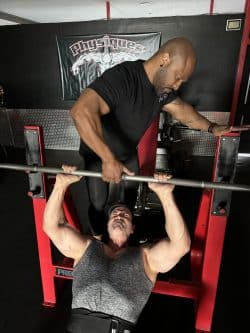
A good coach can help determine where you should start, teach you how to train correctly, progress your program appropriately and provide accountability when motivation isn’t particularly high.
And experience matters.
Physiques Gym has been serving the Phoenix community for more than two decades.
Craig Tinnelle brings more than 30 years of fitness experience to the gym. Cara Barnes has well over 15 years of experience, and Dominique Nelson brings approximately eight years of experience to our team.
We’ve worked with people at very different starting points.
Some want to lose significant weight.
Some want to build muscle.
Some want to get stronger.
Some simply want to walk up a flight of stairs without getting winded or feel confident walking into a gym again.
The goal doesn’t have to impress anyone else.
It just has to matter to you.
Frequently Asked Questions About Losing Weight After 40
Why am I gaining weight in my 40s when I’m eating the same?
Your activity level, muscle mass, sleep, hormones, medications, portion sizes and overall energy needs may have changed even if your basic diet hasn’t. Sometimes several small changes occur gradually enough that they’re difficult to notice.
Is a slow metabolism the main reason weight loss is harder after 40?
Not necessarily. Metabolism and body composition can change with age, but daily activity, muscle mass, nutrition, sleep and lifestyle are also important factors.
Should I lift weights if my goal is weight loss?
Resistance training can be an important part of a weight-loss program because it helps build or maintain muscle while improving strength and physical function.
Should I do more cardio to lose weight after 40?
Not automatically. Cardio can contribute to energy expenditure and cardiovascular fitness, but it should be considered alongside resistance training, nutrition, daily movement and recovery.
Can you still get in great shape after 40?
Yes. Your starting point, timeline and strategy may be different from someone younger, but adults can still improve strength, fitness, body composition and physical capacity well beyond their 40s.
Your 40s Aren’t the Problem. You Just Need the Right Strategy.
If losing weight feels harder than it used to, don’t immediately assume something is wrong with you.
And don’t respond by punishing yourself harder.
Take an honest look at what’s changed.
- Your activity
- Your training
- Your food
- Your sleep
- Your recovery
Then start making changes you can actually sustain.
If you’re not sure where to begin, that’s where experienced coaching can help.
Physiques Gym is a private training facility in Phoenix, Arizona. Training people toward their goals is what we do.
Whether you’re 40, 50, 60 or beyond, we’ll meet you at your current starting point and help you build a training strategy around where you want to go.
Because getting older doesn’t mean you’re finished making progress.
It means it’s time to train smarter.